Journals · 1 February 2018 · 12 min read
Building a Traveler's Notebook that lasts
A leather cover, a few refills, and the discipline not to carry an entire stationer on a rubber band. How we used to build travel journals at the Aspley counter.
By The Bookbinders desk
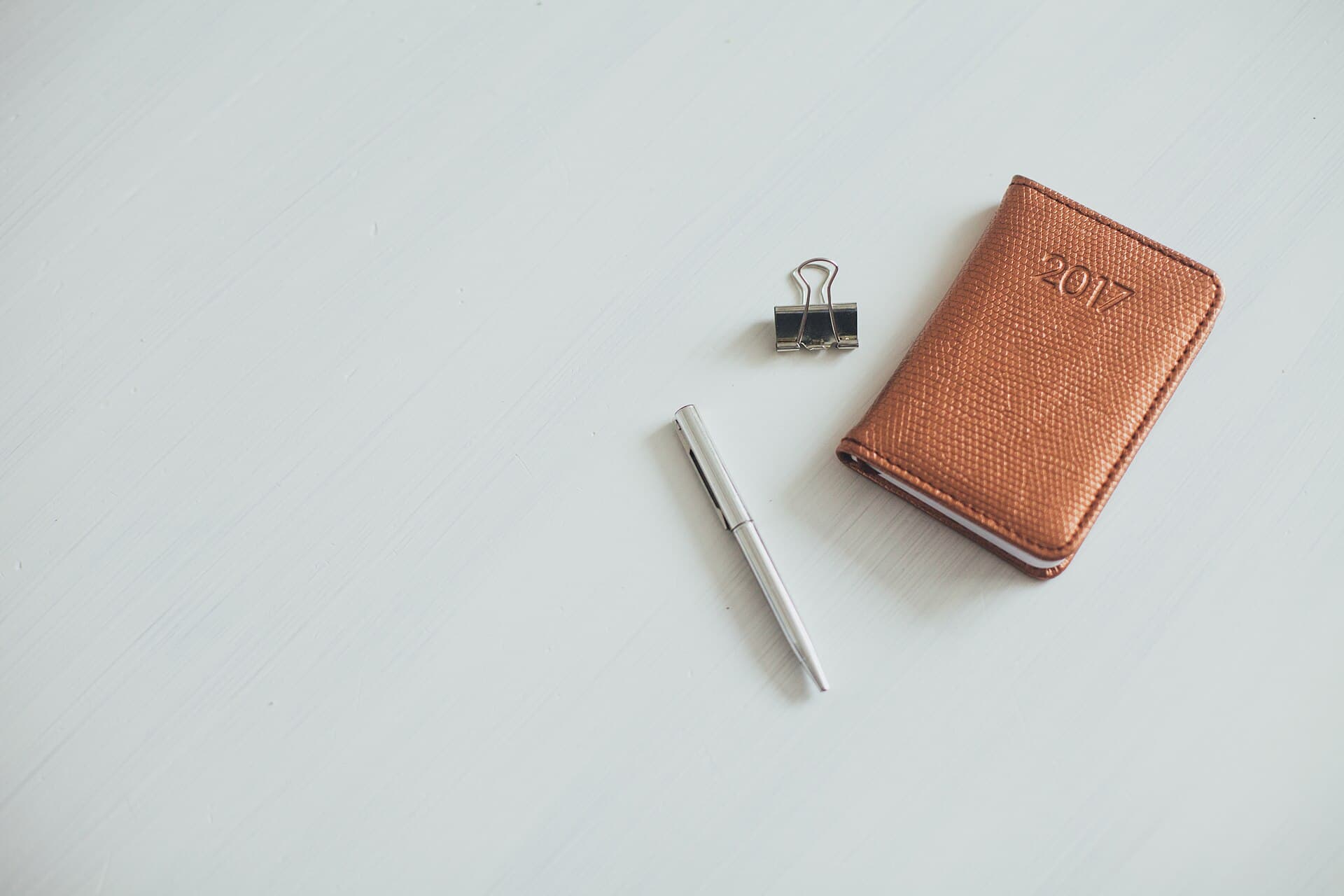
Image: Kelly Jean. CC0 1.0. See the image credits.

The old homepage used to say it without embarrassment: the ultimate travel journal, start your adventure, Traveler's Company. There was a video about adding accessories. There was a tile that treated the cover as a system, not a notebook. People came in having watched a stranger on the internet empty a pouch of charms onto a hotel bed. We built them something they could still close with one hand.
A Traveler's Notebook — Midori's, then Traveler's Company's — is a piece of leather and a rubber band. Everything else is a decision. This is how we made those decisions at the counter, and how the system still earns its keep on Australian roads.
The cover is a tool, not a scrapbook
Leather will take your life whether you ask it to or not. The camel darkens. The black scuffs. The blue becomes a map of a bag. That is the product. If you wanted a cover that stayed shop-new, you wanted plastic. Oil it sparingly if the maker's advice and your climate agree; Queensland humidity will do some of the softening for you. Do not bake it on a dashboard to "speed the patina". That is how you speed a crack.
Regular size is the house default for a journal that does the work of a bag. Passport size is for people who already travel light and will actually carry it. We sold both. We talked people out of buying both on the same day unless they had two jobs for two covers.
The brass clip, the zipper pocket, the pen holder — each one is useful until the fourth one. The video on the old site added accessories because that is a shop demonstration. Your job is to subtract until the book closes.
Refills: paper first, layout second
Blank, lined, grid, dot, weekly, sketch, kraft. The layout is a preference. The paper is a test. Traveler's refills are fountain-pen friendlier than many gift-shop notebooks and less friendly than a dedicated Midori MD pad. Test your ink pairing before you take a wet stub across the Nullarbor.
We used to post up to two refills as a letter when Australia Post's API could not see the difference. That sentence from 2014 is still the spirit: the refill is a consumable, not a relic. Fill it. Replace it. Keep one as a relic if you must, in a box, not as a third volume you never write in because you are afraid to spoil the set.
If you need fountain-pen luxury, put an MD notebook in a different cover, or accept that the Traveler's refill is a travel paper. If you need a diary that starts in January and understands Monday, read dated planners for the Australian year. The Traveler's weekly inserts are a Japanese-week conversation you should have with yourself before you leave the shop.
A working configuration
One notebook for days: dated or not, but daily. One for projects or sketches. A zipper pocket for tickets and the receipt that will otherwise become compost in the bag. A pen loop with a pen that does not leak in the heat — see humid-climate care. That is a system. A watercolour folio, a card file, a charm that rings against a café table, and a fourth insert that slumps out of the band is a stall.
Use the connecting rubber band as intended. Do not invent a knot that cuts the leather. Replace bands before they perish in the sun. Spare bands weigh nothing and prevent the particular sadness of a cover in a glovebox with its pages gone.
What the system is for
It is for a trip, and then for the year after the trip when you realise the same object will hold a life. The "digital detox" tile on the old site was next to the Traveler's tile for a reason. A phone will hold more. A leather cover will hold what you are willing to write by hand, which is a smaller and more honest pile.
If you are building one because you liked the look, build it small and see whether you write. If you are building one because you already write on receipts, you are the customer we used to make tea for. Start with the cover, two refills, a pen you already know, and the travel-journal field notes. The adventure can start without a charm.
Rubber bands, climate and the cover that lasts
Bands perish in sun. They perish faster in a glovebox. Keep spares in the zipper pocket, not in a jar on a sill. When a band snaps, the inserts will tell you whether you were carrying too many. Replace the band before you blame the leather.
Leather in a humid city will stay soft and will also stay damp if you leave the cover in a wet bag. Dry it open, in the shade. Do not oil a wet cover. Do not store it with a leaking pen in the loop and then call the stain patina. Patina is use. A blot is a blot.
A year in one cover
Some people start a new cover every January. Others keep one cover for a decade and let the inserts be the years. We preferred the second, because the leather then does the job the old homepage assigned to adventure: it keeps a life. Date the inserts. Number them if you must. When the cover finally splits, you will have a stack that is already organised, and a new piece of leather can begin without a ceremony.
Inserts you can make, and inserts you should buy
You can fold a cheap pad to size and sew it, and you should once. You should also buy the maker's insert when you want the paper to behave with a fountain pen. Mixed inserts are allowed. A homemade sketch pad and a bought weekly can live on the same band if the thicknesses agree.
The system was always a rubber band. Do not let a catalogue convince you it is a religion.
Questions from the bench
- Regular or passport size?
- Regular if the notebook is a desk that travels. Passport if it must live in a jacket or a small bag. Size is a carrying decision, not a moral one.
- How many refills should I carry?
- Two or three. A fourth is how the leather stops closing and the rubber band becomes a project. Use a connecting rubber band, not optimism.
Further reading
Journals · 3 December 2024
When to restitch a notebook and when to replace it
A full notebook is not always a finished object. Sometimes it wants a new cover, a new stitch, or a decent burial in a tin. A bindery-minded guide for people who are not binders.
Journals · 20 February 2024
Leuchtturm1917 versus Midori MD
Two notebooks that look like the same job and are not. One is a system with a contents page. The other is paper that wants a fountain pen. Here is how we used to choose for people.
Journals · 8 January 2019
Dated diaries and planners for the Australian year
January is when our year starts, Monday is not always Monday, and a diary printed for the northern hemisphere will waste your first week. How to buy a dated book that matches this country.